Resources / Instruments / Instrument comparison
Instrument comparison
Overview
This is a reference table for the string instruments most relevant to makam and dastgah study. Some of these are directly supported by the app; others are included because their tuning and modal traditions overlap.
Comparison table
Established unless otherwise marked.
| Feature | Cümbüş | Oud (Turkish) | Oud (Arabic) | Setar | Tanbur | Tar | Baglama/Saz |
|---|---|---|---|---|---|---|---|
| Origin | Turkey (20th c.) | Turkey/Arab world | Arab world | Iran | Turkey/Kurdistan | Iran/Caucasus | Turkey (Anatolia) |
| Tradition | Turkish makam, Roman | Turkish classical | Arabic maqam | Persian dastgah | Turkish classical | Persian dastgah | Turkish folk |
| Strings | 12 (6 x 2) | 11-13 | 11-13 | 4 (3 courses) | 6-8 | 6 (3 courses) | 7 (varies) |
| Courses | 6 doubled | 5-6 + bass | 5-6 + bass | 3 (1 paired + 2 single) | 4 doubled | 3 doubled | 3-4 (groupings vary) |
| Doubling | Unison | Unison | Unison | 1 unison pair | Unison | Unison/octave | Unison/octave |
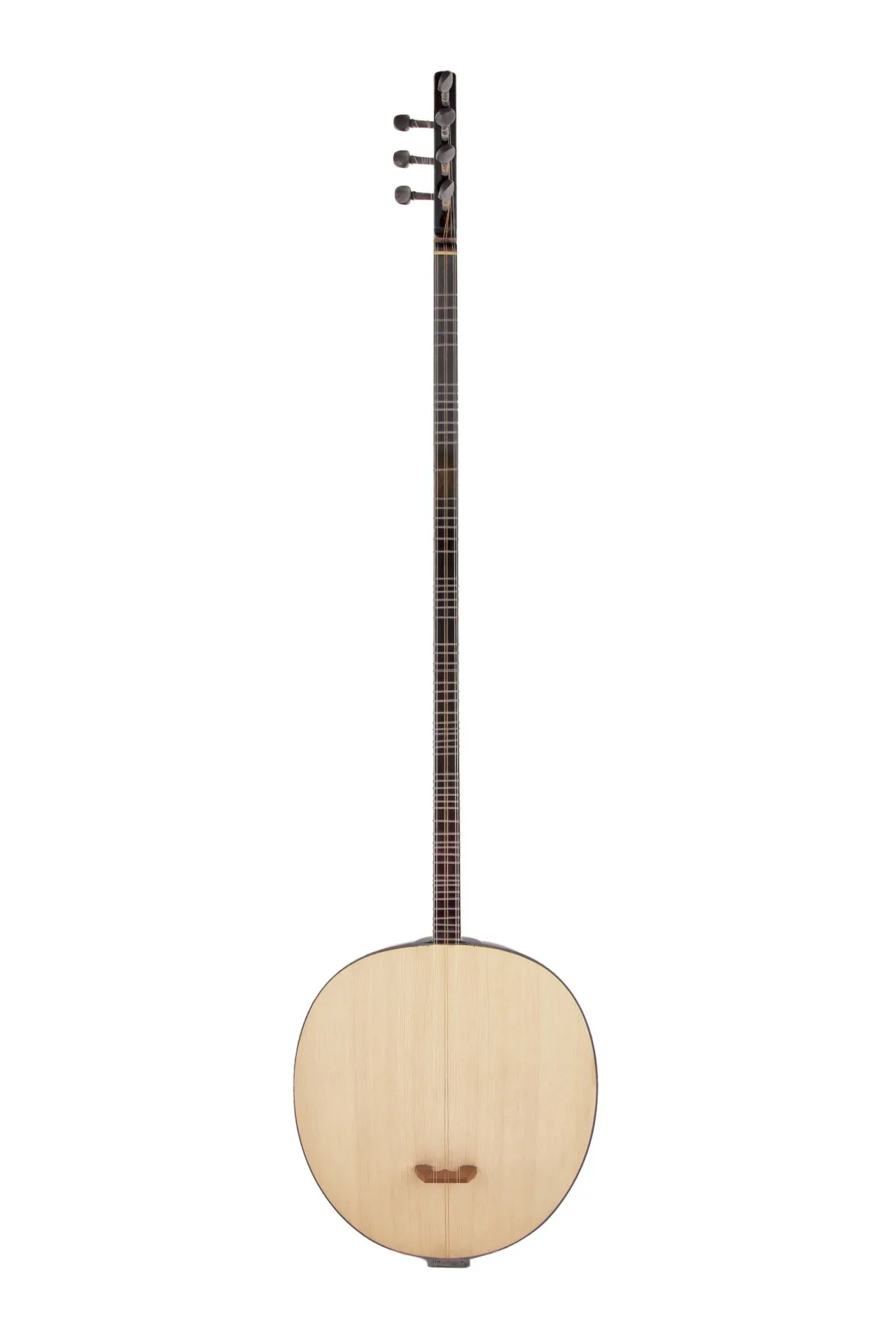
| Neck | Short, fretless | Short, fretless | Short, fretless | Long, fretted | Very long, fretted | Medium, fretted | Long, fretted |
| Frets | None | None | None | ~25-28 tied gut, moveable | ~50+ tied gut, fixed pattern | ~25-28 tied gut, moveable | Tied, moveable |
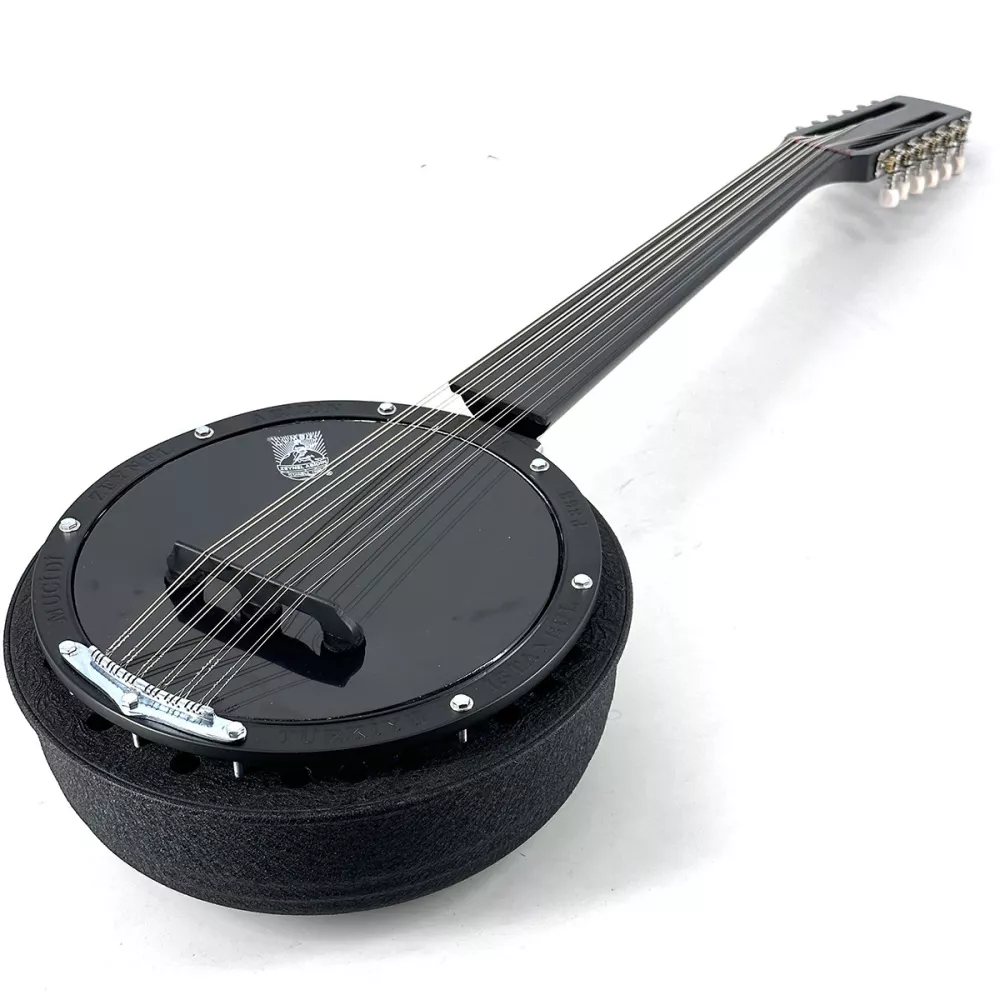
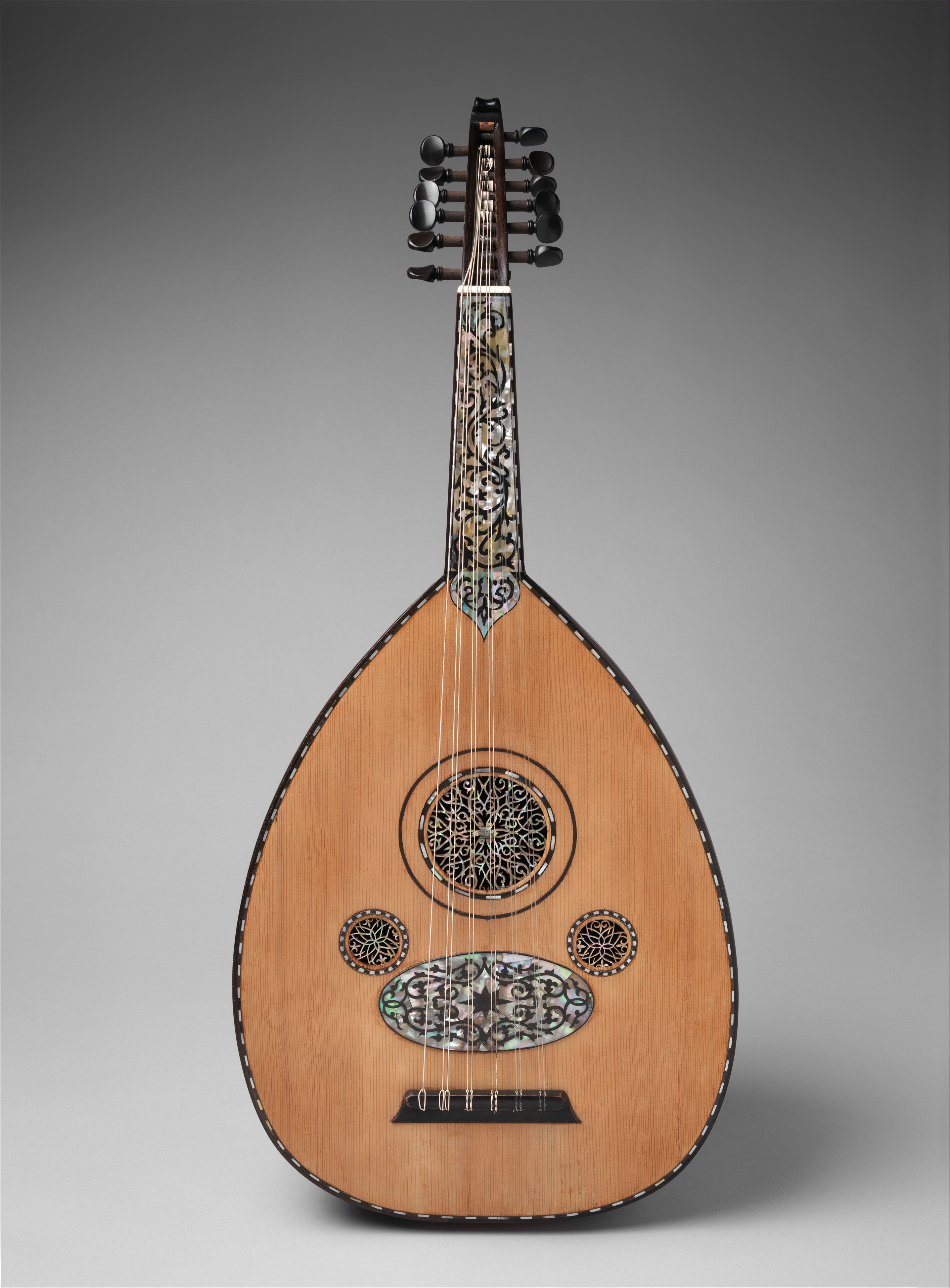
| Body | Spun metal bowl + skin | Wooden bowl | Wooden bowl | Carved mulberry | Carved, narrow | Figure-8, skin face | Carved, various |
| Plectrum | Risha/mizrap | Risha/mizrap | Risha | Fingernail (index) | Mizrap (small) | Brass plectrum (mezrab) | Tezene (pick) |
| Volume | Loud (metal resonator) | Moderate | Moderate | Quiet | Moderate | Moderate-loud | Moderate |
| Scale length | ~60 cm | ~58-61 cm | ~61-63 cm | ~65-67 cm | ~100+ cm | ~65-70 cm | ~60-85 cm (varies) |
Fret types explained
Established The instruments above use three fundamentally different approaches to pitch selection:
| Type | Instruments | How pitch works |
|---|---|---|
| Fretless | Cümbüş, oud | Player finds pitch by ear; any pitch is available; intonation is the player's responsibility |
| Moveable frets | Setar, tar, baglama | Tied gut/nylon frets that can be repositioned to match different modal contexts |
| Dense fixed frets | Tanbur | Very many frets (~50+) tied in a fixed microtonal pattern; player selects from the available positions |
Practice Each approach has consequences for what a study app can help with:
- For fretless instruments, the app's value is in training the ear to hear correct intonation over a drone — there is no physical guide on the instrument.
- For moveable-fret instruments, the app can help the player understand which frets to move and where for a given dastgah or makam.
- For dense fixed-fret instruments like the tanbur, the app can help identify which of the many available fret positions belong to the current mode.
Tuning families
Established The instruments cluster into tuning families:
Oud/cümbüş family — fourths-based, short neck
The cümbüş and both oud types share a tuning framework built on fourths.
Standard Turkish tuning: F#2 B2 E3 A3 D4 G4 (or a whole tone lower in
practice). See The oud and
The cümbüş for detail.
Setar/tar family — variable, drone-plus-melody
The setar's four tunings (Do-Sol, Re-Sol, Do-Fa, Re-La) all feature a paired melody course plus lower drone strings. The tar uses a similar principle with more strings. See The setar for tuning detail.
Baglama family — variable, regional
Attested Baglama tunings vary enormously by region and by musical
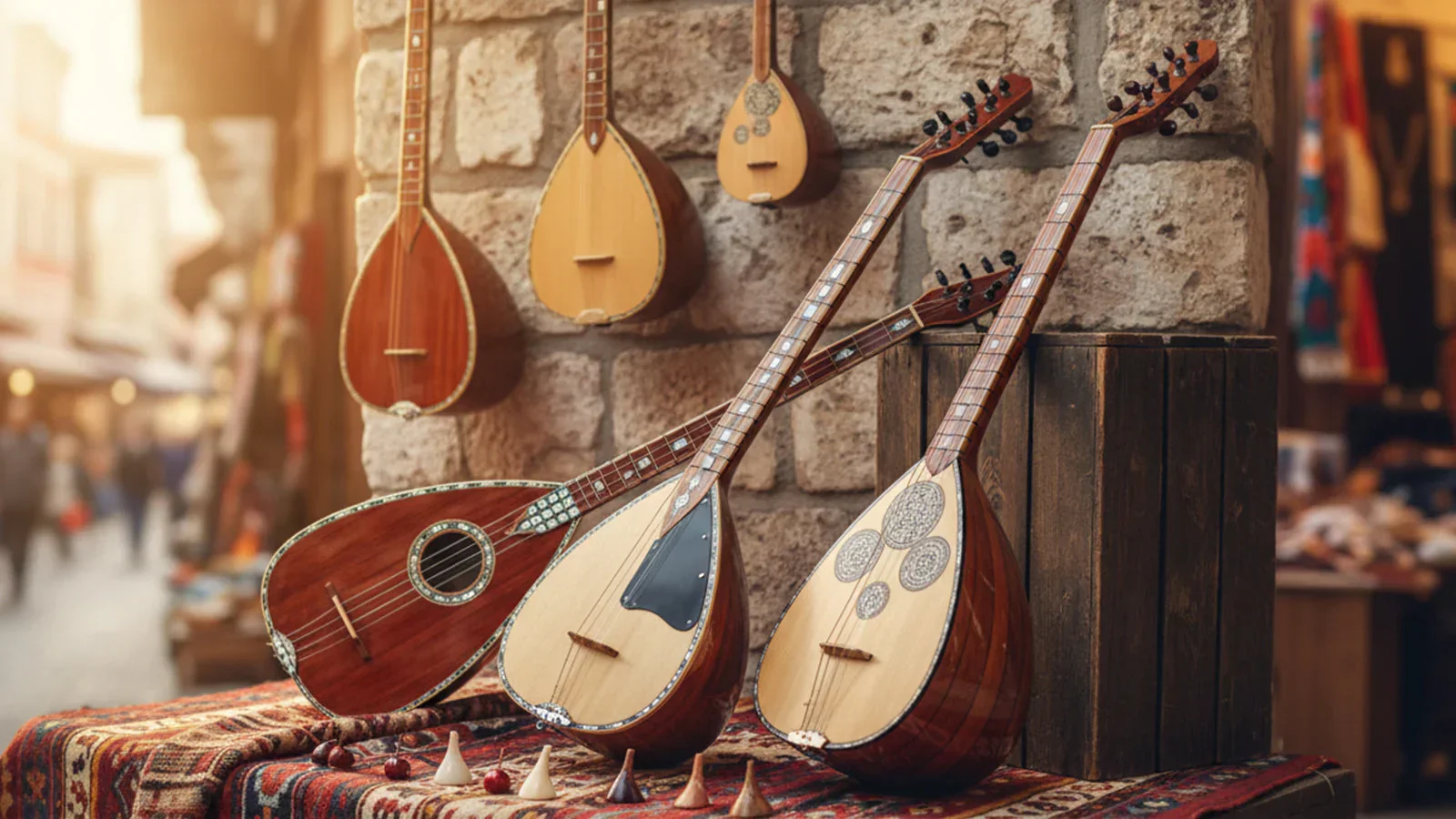
context. The most common starting tuning for study is the "baglama duzen"
(La-Re-Mi or A-D-E), but dozens of regional tunings exist. The baglama's
moveable frets are typically set for Turkish folk music intervals, which
overlap with but are not identical to the AEU comma system used in Turkish
classical music.
Tanbur — 53-comma-aligned fixed frets
Attested The Turkish tanbur's dense fret pattern is specifically designed to provide access to the 53-comma AEU interval set. It is the instrument that most directly embodies the theoretical system described in Pitch systems.
What the app currently supports
Practice Meshk currently supports:
- Cümbüş — the instrument the app was originally designed around. Full support for all standard tunings, makam overlay, and neck visualisation.
- Oud (Turkish and Arabic) — same tuning family as the cümbüş; tunings, makam overlay, and technique transfer directly.
- Setar — Persian classical lute with moveable frets. Standard tunings (Do-Sol, Re-Sol, Do-Fa, Re-La) and dastgah support.
Other instruments (tanbur, tar, baglama) are not currently supported but share enough of the underlying modal theory that the app's resources on makam, dastgah, pitch systems, and cesni/ajnas are relevant to their players.
Visual reference
Cümbüş
Oud
Setar

Tanbur
Baglama/Saz
Sources
- Hormoz Farhat, The Dastgah Concept in Persian Music (Cambridge University Press, 1990) — setar and tar construction, tuning, and playing technique
- Karl Signell, Makam: Modal Practice in Turkish Art Music (rev. ed., Usul Editions, 2008) — tanbur and oud in Turkish classical practice
- Eric Ederer, "The Cümbüş as Instrument of 'the Other' in Modern Turkey" (M.A. thesis, University of California, Santa Barbara, 2006) — cümbüş construction and its relationship to the oud
- Jean During, The Art of Persian Music (Mage Publishers, Washington, D.C., 1991) — setar and tar in the Persian tradition
- Laurence Picken, Folk Musical Instruments of Turkey (Oxford University Press, 1975) — baglama/saz construction, regional tuning variants, and folk music context
- Wikipedia: Setar, Tanbur, Tar (lute), Baglama